
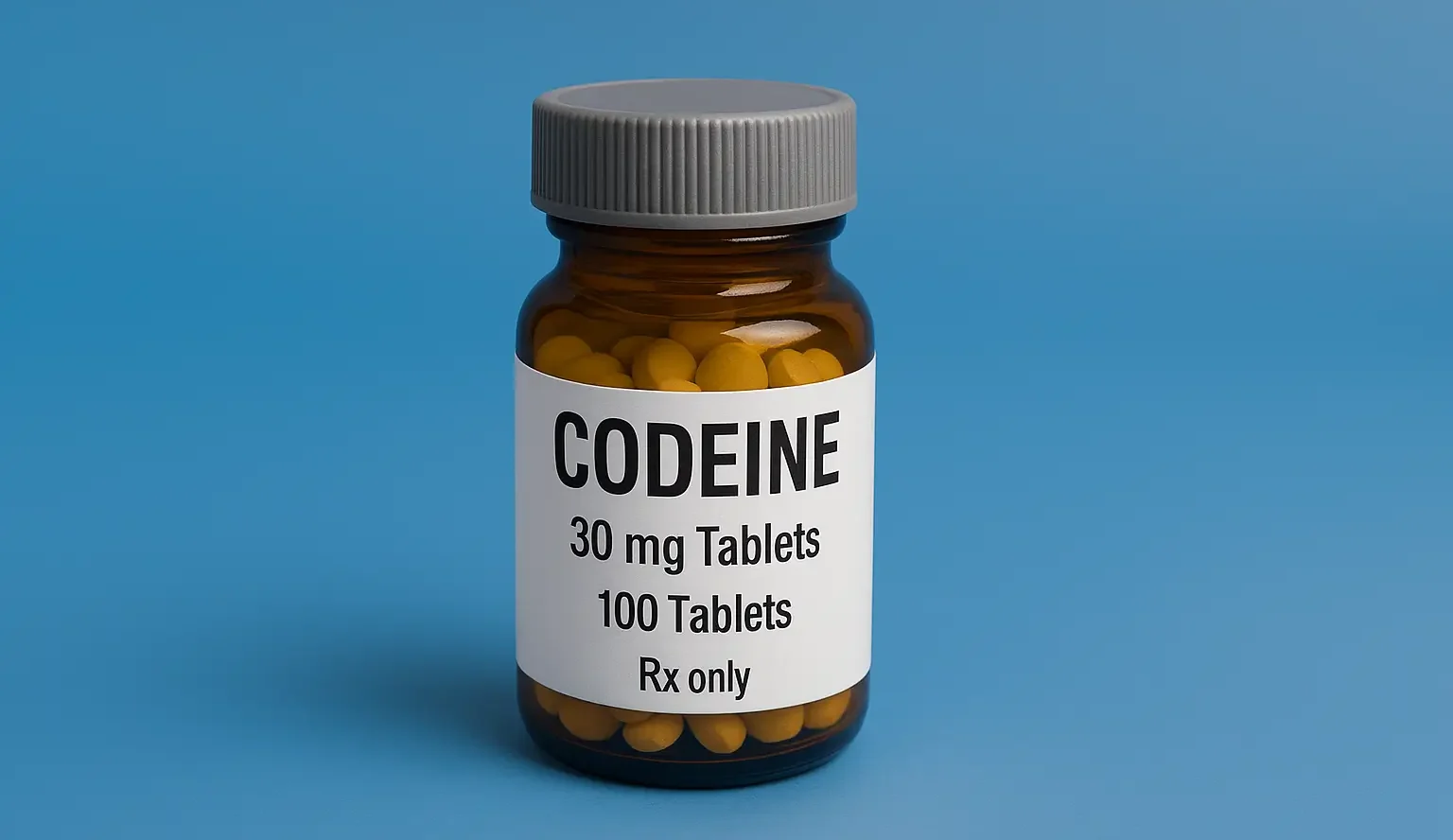
$118.00 – $360.00Price range: $118.00 through $360.00
| Feature | Details |
| Primary Uses | Mild to moderate pain (headaches, toothaches) and cough suppression. |
| Mechanism | Changes how the brain perceives pain and suppresses the cough reflex. |
| Metabolism | Converted by the liver into morphine to provide relief. |
| Common Combos | Often paired with paracetamol (acetaminophen) or ibuprofen for extra strength. |
| Duration | Generally prescribed for short-term relief (3 days or fewer). |
Codeine 30mg is $1.8 per tablet
60mg is $2.0 per tablet
Codeine is an opioid pain reliever and cough suppressant that is available by prescription. It is used to manage mild to moderate pain and to relieve cough symptoms. While many patients research what is the best pain medicine for chronic pain, it is important to note that Codeine is typically prescribed for shorter-term relief of acute symptoms. Codeine is often combined with other medications, such as acetaminophen, to enhance its pain-relieving effects.
Pain Relief: Codeine works by changing how your brain and nervous system respond to pain. It binds to opioid receptors in the brain that are involved in pain perception, helping to reduce the feeling of pain.
Cough Suppression: Codeine also acts on the cough center in the brain to reduce the urge to cough.
Metabolism to Morphine: In the body, a small portion of codeine is converted into morphine, which is a stronger opioid and contributes to codeine’s pain-relieving and potential side effects. This conversion varies among individuals.
Codeine is frequently utilized for:
Pain Management: Used to treat mild to moderate pain, such as headaches, muscle aches, toothaches, menstrual cramps, and minor injuries.
Cough Relief: Prescribed to help suppress persistent, bothersome coughs.
Combined Formulations: Frequently found in combination with non-opioid pain relievers like acetaminophen (e.g., Tylenol with Codeine) or ibuprofen.
Prescription Only: Codeine is a controlled substance and requires a prescription from a healthcare provider.
Dosage: Always take exactly as prescribed. The dose depends on the severity of your condition and your individual response.
Take with Food: Taking codeine with food or milk can help minimize nausea and stomach upset.
Do Not Crush or Chew: If you have extended-release formulations, swallow them whole. Crushing them can release the entire dose at once, increasing the risk of overdose.
Short-Term Use: Codeine is generally intended for short-term use. Prolonged use can lead to tolerance, dependence, and addiction.
Opioid medications can cause a range of side effects. Common ones include:
Drowsiness or sedation
Dizziness and lightheadedness
Nausea and vomiting
Constipation (very common)
Itching, rash, or dry mouth
Confusion
Contact your doctor immediately or seek emergency medical care if you experience:
Respiratory Depression: Severe drowsiness, difficulty waking up, or slowed breathing.
Mental Changes: Confusion or hallucinations.
Severe Reactions: Fainting, seizures, or signs of an allergic reaction (hives, swelling of the face/throat, difficulty breathing).
Addiction and Dependence: Codeine carries a risk of addiction and misuse. Use only as directed.
Respiratory Risks: The most serious risk is slowed or stopped breathing. This risk is significantly increased when combined with alcohol, other sedatives, or benzodiazepines.
Driving: Codeine can impair your ability to drive or operate heavy machinery due to drowsiness.
Alcohol: Avoid alcohol while taking codeine, as it can lead to fatal side effects.
Pregnancy and Breastfeeding: Codeine can harm an unborn baby and pass into breast milk. Discuss risks with your doctor.
Drug Interactions: Codeine can interact with many medications, including muscle relaxants and certain antidepressants. Always inform your doctor about ALL medications and substances you are taking, especially when determining what is the best pain medicine for chronic pain for your specific health profile.
| Milligram-(mg) | |
|---|---|
| Tablets per Bottle |


Reviews
There are no reviews yet.